
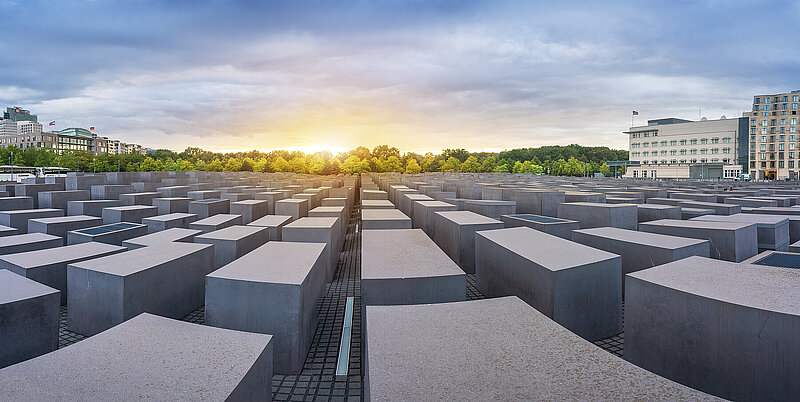
A new study co-authored by Professor Ruth Ditlmann and Oguzhan Turkoglu shows how cultural representations of the Holocaust motivate people to take action and reduce prejudice.
The Holocaust has long stood at the centre of Germany’s national reckoning with its violent past. From school curricula to memorials and museums, Germans are continually reminded of the crimes of National Socialism and the need to prevent such atrocities from happening again. A new study by Hertie School Professor of Psychology Ruth Ditlmann and Postdoctoral Researcher Oguzhan Turkoglu, alongside Berenike Firestone at the Berlin Social Science Center, shows that these Holocaust representations have positive effects on reducing the so-called Holocaust fatigue (the call to “draw a line“ and move on) and improve feelings toward Jews and refugees. Some also increase the motivation to engage in collective action.
Drawing on a nationally representative sample of more than 2,000 adults in Germany, the researchers tested in a randomised online study whether three common ways of depicting the Holocaust can motivate people to commemorate its victims, stand up against antisemitism, and view marginalised groups more positively. Each person was randomly assigned to read one of three short texts, adapted from museum and memorial websites. One text was a personal story about a victim of Nazi persecution (personal story), one was a text about efforts to keep the memory of victims alive through documenting and preserving the injustice done to them (symbolic justice), and one was a text about the sheer extent of the atrocities and the impunity enjoyed by the vast majority of perpetrators (no justice).
Holocaust representations decrease “Holocaust fatigue” overall, but effects differ depending on the type of representation and political persuasion
The authors found that all three Holocaust representations had positive effects overall, compared with the control condition. Each reduced “Holocaust fatigue” and improved feelings toward Jews and refugees. Two of them – the symbolic justice and no justice texts – also increased intentions to engage in commemoration and in efforts against antisemitism.
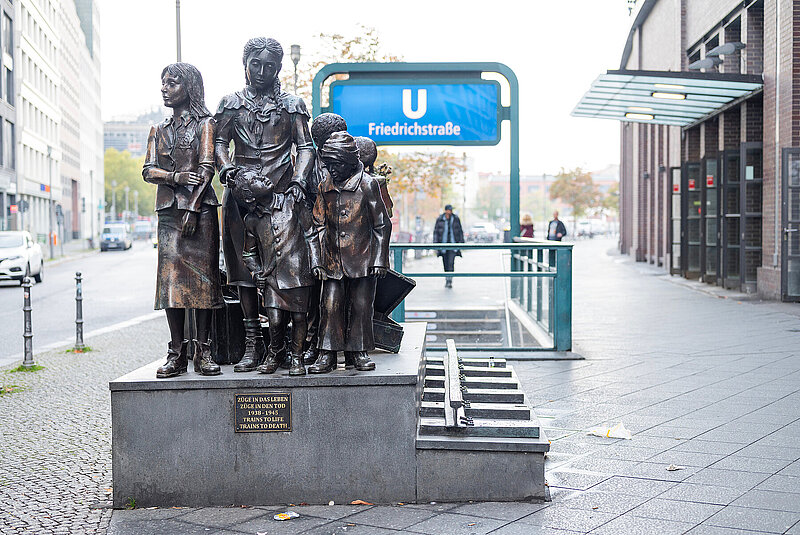
The authors further explored whether some representations are more effective for certain people than others and found striking differences by political affiliation. Among far-right supporters, the personal story increased their motivation to commemorate victims, to act against antisemitism, and improved their feelings toward refugees. By contrast, these respondents showed little reaction to the symbolic justice and no justice texts, whether positive or negative. For supporters of other parties, the pattern was reversed: the personal story was less activating, while the symbolic and no justice representations produced stronger motivation to take action. These findings suggest that different representations resonate with different audiences. Nonetheless, on average, far-right supporters show significantly lower overall levels of support for these causes.
Confronting the past continues to motivate the pursuit of justice today
In an era of polarisation and historical revisionism, the study offers empirical evidence that remembrance can still inspire moral commitment. Whether through the personal stories of victims, learning about efforts to keep their memories alive, or the stark numbers of those never held accountable, confronting the past remains a powerful way to motivate people to act for justice today.
About the study
The study “Confronting the past in a polarized present: Holocaust representations motivate people for symbolic justice and against antisemitism” by Berenike Firestone, Ruth Ditlmann and Oguzhan Turkoglu was published in the journal Social Forces in September 2025.
The original version of this article was prepared and published by the Berlin Social Science Center.
More about our expert
-
Ruth Ditlmann, Professor of Psychology and Public Policy